Minimum Wage Rate in Connecticut: 2026 Employer Guide
Connecticut minimum wage in 2026 is $16.94/hour for covered work. Review tipped-pay conditions, rate changes and official employer guidance.
WOWorkStaff360
November 17, 20264 min read
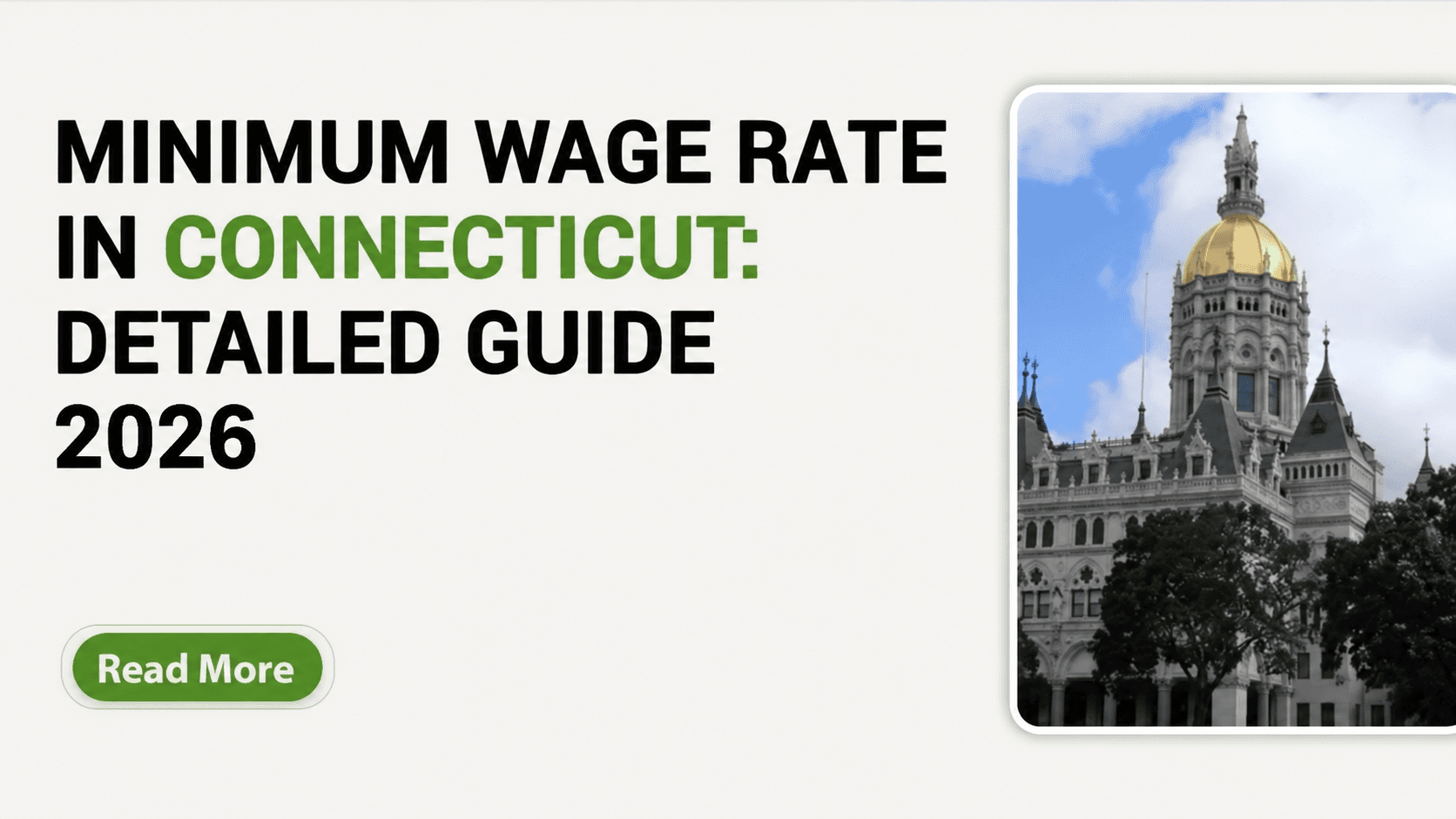


Connecticut’s minimum wage is $16.94 per hour from 1 January 2026. This is the standard state floor for covered work; tipped employment and limited special categories have additional conditions.
Because of the Connecticut Public Act 19-4, which binds annual wage adjustments to the federal Employment Cost Index (ECI), the minimum wage rates in Connecticut are set to increase each year with regard to the economic conditions and cost of living.
This guide explains the current Connecticut minimum wage, tipped cash pay, workplace notices and practical payroll checks. It was reviewed on 19 November 2026; future changes are labelled with their effective dates.
What Is the Minimum Wage Rate in Connecticut for 2026?
The current floor is $16.94, compared with $16.35 in 2025 and $15.69 in 2024. Connecticut links annual adjustments to the Employment Cost Index under state law.
Announced future change: the state minimum will become $17.48 per hour on 1 January 2027. Budget for that increase, but do not describe it as the current November 2026 floor.
A minimum-wage rule sets a legal floor; it does not establish a living-wage estimate for every household or an average salary for every occupation. Avoid using the terms interchangeably.
Comparing State and Federal Wage Rates
The federal floor is $7.25 for FLSA-covered work. Where both laws cover an employee, the higher applicable state requirement controls; federal coverage and protections do not simply disappear.
For eligible restaurant service employees and bartenders, a tip credit can reduce direct cash pay only when the relevant conditions are met. Wages plus eligible tips must reach at least the applicable $16.94 floor, and the employer must cover any shortfall.
The Connecticut 2026 tip statement lists the following guaranteed cash wages for eligible positions:
Eligible restaurant service employees: $6.38 per hour in direct cash wages. Eligible bartenders: $8.23 per hour in direct cash wages. These figures do not apply to every restaurant job, and duties, records and other tip-credit requirements still matter.
For payroll planning, separate direct cash pay, tips and the required combined minimum. Do not calculate tipped overtime by multiplying the reduced cash wage alone.
If you're curious about how these wage rates compare with other states in the region, don't miss our guide on Delaware's minimum wage rate, where we outline the wage trends impacting Delaware's workforce.
List of Workplace Poster Requirements in Connecticut
Connecticut employers need to identify and display the state and federal notices applicable to their workforce. Use current agency posters rather than treating a generic checklist as a complete list for every business.
Review the 2026 minimum-wage notice and applicable industry wage orders, then check other notices relevant to your workplace. Examples can include paid sick leave, workplace safety, discrimination and family-leave information.
- Paid Sick Leave Notice
- Managed Care Notice
- Electronic Monitoring
- Job Safety and Health: It’s the Law (OSHA)
- Employee Rights and Responsibilities Under the Family and Medical Leave Act (FMLA)
For insights into other states' compliance needs, you might want to read about California's minimum wage guidelines to understand how businesses in high-wage states manage these requirements.
Wage Provisions for Special Employment Categories
Special rates and exemptions depend on the specific legal provision. Do not automatically apply a reduced rate to every minor, apprentice, learner or new hire. Confirm eligibility and any required authorization against current Connecticut guidance before payroll is set up.
Disability alone does not establish an automatic right to pay less than the minimum wage. Verify any relevant statutory exception, authorization and applicable state restrictions before relying on it.
How WorkStaff360 Supports Connecticut Payroll Administration
WorkStaff360 can support administrative tasks such as collecting timesheets, organizing payroll inputs and maintaining employee records. The employer should identify who approves wage classifications and changes.
Assistants can help maintain a dated wage register and flag exceptions for review. They do not replace an employer’s responsibility to satisfy state and federal requirements or guarantee protection from legal claims.
Use a written review process for hours, tip credits, deductions and overtime. Covered nonexempt employees generally receive overtime at 1.5 times their regular rate after 40 hours in a workweek, subject to applicable exceptions.
Related Guides and Staffing Support
California's minimum wage guidelines
Official Sources and Review Date
Rates and guidance checked on 19 November 2026. Consult the effective official notice and applicable coverage rules before applying a rate to a particular worker.
Connecticut DOL current and announced wage rates